Sunday, 24 August 2014

Steven Moffat doesn't kill people


Warning: This post contains SPOILERS for Doctor Who Series 1-7. There are NO spoilers for Series 8 as I have not seen any of it yet :P


The current executive producer and lead show-runner of Doctor Who, Steven Moffat, is constantly accused of being a heartless, cruel writer who spends all his time ruthlessly killing off characters, especially main characters. I'd like to argue that whatever else you might say about Moffat, this particular accusation is unwarranted and in fact quite far from the truth.

Although he only took over the helm of Doctor Who in 2010, Moffat had been writing stories for the show from the start of its revival in 2005. For the first four seasons of what's become known as NuWho (during which Russel T Davies was running the show) Steven Moffat wrote one story for each series.

Characters dying in a show like Doctor Who is nothing unexpected. It's full of danger and aliens and monsters and fighting, so it's inevitable that characters will die. More often than not, these characters are unnamed bystanders, extras, but in Doctor Who they are frequently characters whose names we do learn and who do play a significant, though short-lived, role in the story (like the infamous Star Trek "red shirts"). If we go through the episodes of Series 1, we can see how this plays out.

In the first episode, after her initial encounter with the Doctor, Rose Tyler meets up with a conspiracy theorist called Clive Finch, who seems to know a whole lot about the Doctor and runs a website documenting various sightings of him that have been reported. Rewatching this episode on one occasion, I wondered what ever became of Clive; why he never showed up in any later episodes. As I kept watching, the question was shortly answered: he is among various unknown and unnamed characters who are killed by the auton invasion at a shopping mall. In the second episode, Rose and the Doctor meet a sentient tree alien, Jabe, who becomes very friendly with the Doctor. She sacrifices herself in order to help the Doctor save all the other people on board the satellite. In the third episode, a young serving girl with psychic powers named Gwyneth also sacrifices herself, this time to save the world. In other episodes we see the British Prime Minister and various government officials brutally killed by the Slitheen, Suki from Satellite Five among various employees who are frozen to death and turned into flesh machines, and, in the closing episodes, "Lynda with a Y" is among other characters who die defending themselves against the Daleks. There is one set of episodes, a two-parter, that are an exception to this pattern of tragic deaths of minor characters. In Steven Moffat's The Empty Child and The Doctor Dances, although it appears that characters are turned into monstrous zombie creatures with gas masks, the Doctor manages to save them all from this terrible fate by using nanogenes to renew their DNA. Towards the end of the second episode the Doctor makes his famous exclamation: "Just this once, everybody lives! Everybody lives!" And it seems that this statement is truer than he realises. This is the only episodes in Series 1 and arguably the only episode of the entire Davies-era in which nobody dies at all.

But if we look at the other episodes that Moffat wrote for Davies, we see a distinct pattern emerging. In the episode he wrote for Series 2, The Girl in the Fireplace, the doctor successfully saves Madame Le Pompadour from manic maintenance droids who want to use her brain to fix their broken spaceship. He even succeeds in preventing them from killing anyone else in the process. This episode does have death but this is only because, when the Doctor returns to fetch Reinette so she can accompany them on the TARDIS, he arrives too late (some years later) and she has already died from illness. This scene is necessary to the plot since it would not have suited the overall storyline to have an 18th century French noblewoman join the TARDIS crew. It is therefore not an unnecessary tragic death like so many inthe other episodes. I should also note that before the Doctor arrives on the scene, various crew members of the space ship had already been killed by the manic droids, but both instances of death in this episode happen outside of the Doctor's (and audience's) immediate experience.

For Series 3, Moffat wrote perhaps his most famous episode, Blink, in which he introduced one of the most terrifying Doctor Who monsters, the Weeping Angels. It seems that here at last we start to see the heartless Moffat that he is reputed to be. This episode is a thriller that has you at the edge of your seat throughout because all it takes is one blink for these monsters to claim their victims. At least that's how it comes across when watching. But when you think about it, it's not all quite so bad as it seems. One could almost argue that nobody dies in this episode at all. Or more accurately no one is killed in this episode. We do see the sad death of Inspector Shipton, but he dies of old age after the angels sent him back in time. He was still able to live a full life, just not at the right time. The same happens with Sally Sparrow's friend Kathy who is sent back to the 1920s and falls in love with the first guy she meets. Moffat actually hasn't created the worst monster of Doctor Who, he's created the one monster that doesn't kill its victims at all, and he admits this himself through the words he penned for the Doctor: "they are the only psychopaths in the universe to kill you nicely". Moffat has in fact invented a killer that doesn't kill. It just displaces you from your current life and lets you "live to death" in an earlier time. Not so heartless after all?

Moffat's final episodes for the Davies-era see a continuation of this pattern. For Series 4 he wrote the two-parter Silence in the Library and The Forest of the Dead. This story bears a resemblance to many of the other non-Moffat ones in which a crew of characters is slowly killed off one-by-one (in this case, by a flesh eating swarm of darkness), until almost none are left. And then the episode ends with the most tragic death (by self sacrifice) of a mysterious woman named River Song, who seems to know a lot about the Doctor from his future and to have been very close to him. You think the episode is going to end on this sad note and that yet another potential companion and friend of the Doctor is lost forever (like Jabe and Reinette and Lynda with a Y) but this time the Doctor realises that because he had known in his future that River would die, he had had time to come up with a plan to save her. He isn't able to bring her back physically, but he can upload her conscious into the library's massive computer database. And apparently, in the process, all the other crew members who were killed off throughout the episode have also been uploaded to the computer's dream world. So not only is River alive, but so are her friends; and they are together. We get a lovely monologue from River at this point in the episode:

"Everybody knows that everybody dies and nobody knows it like the Doctor. But I do think that all the skies of all the worlds might just turn dark if he ever for one moment, accepts it. Everybody knows that everybody dies. But not every day. Not today. Some days are special. Some days are so, so blessed. Some days, nobody dies at all. Now and then, every once in a very long while, every day in a million days, when the wind stands fair, and the Doctor comes to call... everybody lives."

It looks to me that rather than exulting in killing off characters, Steven Moffat is constantly trying to find ways for his characters to escape death. If these examples aren't convincing enough, consider this: There is another episode in Series 4 which was not written by Moffat, but which he did influence. It is The Doctor's Daughter written by Steven Greenhorn. In this episode, the Doctor's DNA is used to create a sort of clone of the doctor (though with the DNA altered in such a way to create a "daughter" rather than a duplicate copy). The episode ends with his genetically created daughter tragically dying (again mostly for plot reasons, because they did not at this point want to introduce a new character, especially one with Time Lord DNA). Originally that was to be it; Jenny was to die and for whatever reason, not regenerate. But apparently Steven Moffat on hearing about this, intervened and insisted that they bring her back to life (but without the Doctor's knowledge), leaving it open for her to return one day. She has not yet returned, mainly because that was never the intention. But is that enough to convince you that Moffat doesn't like characters dying?

I haven't even gotten to the point where Moffat took over the show and I shan't go into detail for all these episodes. But his tendency to avoid or overcome death, rather than actually kill off characters, continues to be a theme throughout. Although he is famous for killing off Rory Williams numerous times, only one, (perhaps two), of them are actually "real" deaths (not dreams or someone messing with Amy's head), and even after those, Moffat finds ways of bringing him back. Amy and Rory's exit of the show in Angels Take Manhattan does not see them dying as such (although we do see their gravestone), but once again Moffat uses his kindly psychopaths, the Weeping Angels, to send them back in time; away from the Doctor but with each other and able to live out their lives till old age.

In Moffat's second series, Series 6, he begins the opening scene by killing off none other than the Doctor himself - completely dead; so that he cannot even regenerate. But this is immediately followed by a discovery that it is the Doctor in the future whose death we have witnessed and the remainder of the series is an exercise in showing how it is that in fact the Doctor did not die (which includes him being murdered again at the midpoint in the series - this time with poison and no ability to regenerate; but River Song steps in at the last moment and saves him. Again). In Series 7, the new companion Clara Oswin Oswald is the latest supposed target of Moffat's killing sprees. She manages to die twice in her first two episodes. But by now it's becoming increasingly difficult for anyone to believe that someone who dies will genuinely stay dead. And the speculations are all about how he's going to explain her not being dead.

Moffat isn't a murderer. He doesn't like killing characters. Sure, he likes to make us think that characters are dead, but far from the heartless person he is made out to be, it seems rather that he doesn't have the heart to let anyone stay dead. Of course, this is an oversimplification of matters and there are exceptions (note: Lorna from A Good Man Goes to War). Of course he is also not the only writer of Doctor Who stories to make us think a character (especially a companion or the Doctor himself) has died only to bring them back again (see: Jack Harkness, who as character may have been Moffat's creation, but whose immortality probably only came later; also see the partial regeneration of Ten in Journey's End). But I think there is enough evidence to argue that Moffat is not really the cruel-hearted killer of characters he is made out to be. On the contrary, he is constantly on the search for ways to ensure that "Everybody Lives!"

Post script: You will notice that I haven't mentioned Moffat's other television series, Sherlock. I originally planned to include it, but I thought there was enough to talk about in Doctor Who and I haven't yet seen Sherlock Series 3. So I decided to leave it out. Maybe one day I'll write a follow-up.

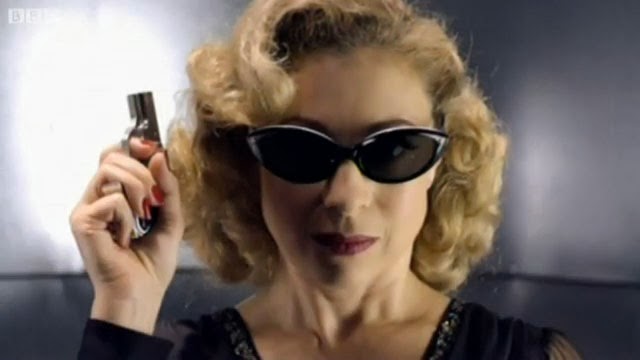
The illustrations are just for fun - I am aware that they contradict the point of the article. But they do illustrate the kind of reputation I am disputing.

Wednesday, 4 June 2014

Lessons from the TARDIS


Warning: Potential spoilers for all of Doctor Who post 2005 (especially 1.13 The Parting of Ways, 6.4 The Doctor's Wife and 7.13 The Name of the Doctor). This is written with the assumption that you are familiar with the stories.

I'm always a little hesitant to make spiritual applications to secular things. But here I am doing it again :-p And I suppose that it is something Jesus himself did in parables (taking the secular and using it to explain sacred lessons). Various people have pointed out the God-like characteristics of the Time Lord known as the Doctor in the popular British TV series Doctor Who. I did it myself some time ago in my post The Doctor and Jesus. It tends to make me feel a little uncomfortable, although I have seen it done well and sensitively. I have no problem, for example, pointing out character traits of the Doctor that can demonstrate Christ-like behaviour (as one might do with biblical characters such as Noah and Joseph and David). It's when people start seeing him as a replacement for God or an incarnation of Jesus (problematic for various reasons, not the least of which are his many faults), that I feel they have gone too far. I suppose that it is the Doctor's super-human abilities (which enable him to save planets and races and overcome death), that lend to his being compared to God and/or Christ. But it recently occurred to me that there is another character in Doctor Who which can provide for us lessons or illustrations about God and his character and how he interacts with mankind. The Doctor's sentient space ship, the T.A.R.D.I.S, bears a number of similarities to the Christian concept of God. And so I present to you five "Lessons from the TARDIS".

1. "I always took you where you needed to go"


The TARDIS is notorious for messing up the Doctor's instructions and taking taking him and his companions everywhere but where they want to go. The Doctor plans to take Amy and Rory to sunny Rio, but they end up in a cold rural Welsh village, just in time to rescue the earth from an invasion of Homo Reptilia. He tries to take Rose to a concert in Sheffield in 1979 but they end up in Victorian Scotland a hundred years earlier (and help to save Queen Victoria's life – and the world). He promises to take Donna to Ancient Rome, but but they arrive in Pompeii just in time for Mt Vesuvius to erupt. Even in the Classic era, he seldom ends up where he planned to take his companions – regularly getting either the place or year (or both) wrong.

It is never entirely clear whether it's the Doctor's lack of flying skill or the TARDIS' unreliability that is at fault; perhaps it is a combination of both. We know the Doctor didn't care much for following the TARDIS instruction manual, and that River, who was taught by the TARDIS herself was much better at flying than he was. But at the same time, the splinter-version of Clara that visits the First Doctor, telling him which TARDIS he should steal, mentions that her navigation system is “knackered”.

In the last episode of Series I, The Parting of Ways, it seems that there is even more going on than the Doctor's flying skills or the TARDIS' navigation system being unreliable. In this episode, we discover that the various occurrences of the words "Bad Wolf" throughout the series were not coincidental, but part of a greater plan which the TARDIS had some sort of control over.

In the episode from Series VI called The Doctor's Wife, the episode in which we learn the most about the TARDIS (because it is the one time she is given a voice), the Doctor openly questions her unreliability. Her response is profound.

I just want to say, you know, you have never been very reliable. 
And you have? 
You didn't always take me where I wanted to go.
No, but I always took you where you needed to go.

The Doctor is stumped. He can't argue back because he knows she is telling the truth. Every time he ended up somewhere other than where he intended to go, it was for a good reason. Usually she brings him to a place at a point in history just in time to save the world (or universe) from a terrible fate/destruction. Sometimes, it is for his own good or character-building or that of his companion(s). Though he has many narrow calls and sometimes he regrets (at least in part) the outcome, I don't think he could ever say to the TARDIS, looking back, “Why did you take me there?” There was always a reason for her taking him off course and it was always for the good of him, his companions and the universe as a whole.

It is in this respect, that the TARDIS reminds us of the Lord. We often find ourselves in places where we can't understand what is going on and why the Lord has let us end up in that place. But without fail, whenever we look back, we can always see how that was exactly where we needed to be at that point in time. Whether for our own good, or for the good of others, all the things in our lives that might look like accidents, really aren't. He always takes us where we need to go.

And we know that all things work together for good to those who love God, to those who are the called according to His purpose. (Rom 8:28)

From one man he made all the nations, that they should inhabit the whole earth; and he marked out their appointed times in history and the boundaries of their lands. (Acts 17:26)

2. Outside of Time


A second characteristic of the TARDIS that reminds us of the nature of God, is the manner in which she exists outside of time. I've never fully understood the mechanics of TARDIS time travel (I don't think it's ever fully explained), but we know she enters this tunnel that exists outside of time and space (the time vortex) and from there she can take the doctor to any point in the universe and in history. We see this in The Doctor's Wife when Idris gets confused about tenses and the past and present and starts talking about things that haven't happened yet.

The Doctor: Why am I a thief? What have I stolen?
Idris: Me. Are you going to steal me? You have stolen me. You are stealing me. Oh! Tenses are difficult, aren't they?

We get an even more powerful idea of this in The Parting of Ways. Rose, having absorbed the soul of the TARDIS makes the following famous speech:

I am the Bad Wolf. I create myself. I take the words...I scatter them, in time and space. A message, to lead myself here. You are tiny. I can see the whole of time and space, every single atom of your existence, and I divide them. Everything must come to dust. All things, everything dies. The time war ends. How can I let go of this? I bring life. The sun and the moon, the day and night. I can see everything... all that is... all that was... all that ever could be.

The TARDIS herself can't usually create life, but in this particular situation (I'm never quite sure how much is TARDIS and how much is time vortex and what the actual difference is), we get the idea of how transcendent the TARDIS is with respect to our little closed sphere of time and space. Even the Doctor, who can travel in time, needs to physically travel backwards and forwards to experience different occurrences. The TARDIS on the other hand seems to exist outside of time and knows all things that have happened and will happen simultaneously. That, in fact, is how she was able to always take the Doctor where he needed to go.

And so with God. He created time and exists outside of it. To him tenses are meaningless (except in his understanding of how they apply to us). He knows the beginning from the end and has seen all the days of our lives before any has come to be.

From everlasting to everlasting you are God.
A thousand years in your sight
are like a day that has just gone by,
or like a watch in the night. (Psalm 90:2b, 4)

For thus says the High and Lofty One
Who inhabits eternity, whose name is Holy... (Isaiah 57:15a)

Where can I go from your Spirit?
Where can I flee from your presence?
If I go up to the heavens, you are there;
if I make my bed in the depths, you are there.
If I rise on the wings of the dawn,
if I settle on the far side of the sea,
even there your hand will guide me,
your right hand will hold me fast. (Psalm 139:7-10)


3. "This was when we talked"


One peculiar characteristic of the TARDIS is that although she is sentient and intelligent, she is not usually able to communicate with the Doctor. There is no direct interface between them and though the Doctor can speak to her (and it seems she hears him), she does not speak back.

Except once. In The Doctor's Wife, the soul of the TARDIS was removed from the machine and poured into the body of a human woman, Idris. Suddenly she was given a voice, and she could tell the Doctor things directly. They could discuss past events (their running away together), their present struggles, and even some hints about the future were given (“the only water in the forest is the river”).

While the circumstances are vastly different, God too does not normally speak to us directly. His communication with us, for the most part, is through what we can see in the world he has created, from his revealed word (the bible), from the events that happen in our lives, and sometimes through the mouths of others speaking on his behalf. In Old Testament times, he revealed his Law to the patriarchs and Moses and the prophets and for a long time that was all people had to go on as direct communication from God. I suppose the Law might be compared to the TARDIS instruction manual. Men in general had (and still have) the same attitude to God's Law as the Doctor did to the manual: “I threw it into a supernova, because I disagreed with it.”

But once, just once, for a short period, God, like the TARDIS, did communicate with us directly. This was when he came to earth in the form of a human, Jesus Christ. As Idris contained the soul of the TARDIS, so Jesus was the essence of God poured into the body of a human. During this time, he explained in person who God was, what he had done in the past and what would happen in the future. Of course, Jesus did a lot more than this. In the case of Idris, her “incarnation” was accidental (the work of a hostile enemy), whereas Jesus' incarnation was intentional and planned from before the beginning of time as the means by which God would save humans from their sinful and doomed nature.

In the beginning was the Word, and the Word was with God, and the Word was God. And the Word became flesh and dwelt among us, and we beheld His glory, the glory as of the only begotten of the Father, full of grace and truth. (John 1: 1; 14). 

God, who at various times and in various ways spoke in time past to the fathers by the prophets, has in these last days spoken to us by His Son, whom He has appointed heir of all things, through whom also He made the worlds; who being the brightness of His glory and the express image of His person, and upholding all things by the word of His power, when He had by Himself purged our sins, sat down at the right hand of the Majesty on high. (Heb 1:1-3)

While the plan was different, and Jesus' death was far more important to all people, there is one similarity in their deaths. When Jesus was crucified, his enemies thought they had won. They assumed that he was defeated once and for all, but they were wrong. Jesus, because of his holiness and lack of sin, could not remain dead, but was raised again to life triumphant. So Idris, when House thought he had destroyed her, found that the last laugh was not his. He made the mistake of trying to kill her in her own TARDIS shell. He had placed her in a body that would not long survive being inhabited by a TARDIS soul, but as the body decayed, her soul was set free and able to return to it's true house.

One of the last things Idris says to the Doctor, before the soul of the TARDIS left her, was “I'll always be here, but this is when we talked”. The TARDIS is still with the Doctor, but they have reverted to the old manner of living. There is no more direct communication, but they still live and travel together. She is always with him and there for him, making sure he ends up exactly where he needs to be.

Are you there? Can you hear me? Oh, I'm a silly old... Okay. The Eye of Orion, or wherever we need to go.

So, when Jesus returned to heaven, the time during which God lived on earth and communicated directly with mankind was at an end. But we have the record of what he said and did while he was here to encourage us and help us to understand better what it is God wants from us as we live.

4. "I stole you"


This has the potential for entering muddy waters, but I don't think it needs to. Bear with me as I try to make the point I have in mind. One of the most poignant (though also humorous) moments in The Doctor's Wife is the following conversation:

Idris: Do you ever wonder why I chose you all those years ago?
The Doctor: I chose you. You were unlocked.
Idris: Of course I was. I wanted to see the Universe so I stole a Time Lord and I ran away. And you were the only one mad enough.

This is a funny moment, but interesting too. Which version of the story is true? Despite what she says, the TARDIS does not hesitate to refer to the Doctor as “my thief”, implying that she does not take full responsibility for their running away together. I think the answer is that both versions are true. The TARDIS almost admits as much earlier on in the episode (when we still aren't entirely sure who she is): "Then you stole me. And I stole you." The Doctor wanted to run away, so he stole a TARDIS. The TARDIS wanted to see the universe, so she left her doors open for him to find her. The TARDIS provided the means of escape, but there was also a desire on the part of the Doctor to make use of those open doors and use the TARDIS as his means of escape.

This is a terribly inadequate description of what happens at salvation and I honestly don't want to take it any further, but I like the idea of it as a springboard for understanding the problem. I don't think we'll ever find the answer to the question of how we come to salvation (of our own free will or by God's sovereign will) by asking which of the two options are the right one. Like the question of whether the Doctor stole the TARDIS or the TARDIS stole the Doctor, the answer isn't either/or. Both are simultaneously true.

If you confess with your mouth the Lord Jesus and believe in your heart that God has raised Him from the dead, you will be saved. (Rom 10:9)

For by grace you have been saved through faith, and that not of yourselves; it is the gift of God, not of works, lest anyone should boast. (Eph 2:8-9)

Also, this is probably taking things too far, but since I'm already here, one more point. The story of the Doctor's original departure from Gallifrey is a little bit more complex since The Name of the Doctor aired. No longer is it simply a question of the Doctor or the TARDIS choosing each other. When I first watched the scene where Clara confronts the First Doctor, telling him to steal a different TARDIS to the one he was actually planning to take, I really liked the idea. But then I realised that it contradicted the TARDIS' version of the story from The Doctor's Wife where it is implied that he stole that particular TARDIS because she was the one with unlocked doors. We don't know anything about the other TARDIS the Doctor was planning to steal before Clara intervened (whether or not her – or his; do we have male TARDISes?) doors were unlocked, or whether the Doctor was planning to break in somehow. Whatever the story was, could I make a half-hearted suggestion that Clara's role in this story was like that of an evangelist (by which I mean any Christian sharing the Gospel with another person) who pointed the Doctor to the right TARDIS?

I'm gong to leave this issue here. (*hides from barrage of responses*)

5. The Doctor's Wife (an unusual marriage)


Finally, I always found the title of the episode The Doctor's Wife slightly confusing. I get the point about the Doctor and the TARDIS being like an old married couple – always together, often arguing, but sharing a deep respect, care and love for each other. Amy put it best when she said “Look at you pair. It's always you and her isn't it? Long after the rest of us have gone”.

But at the same time, I found this rather incongruous in the light of the Doctor's relationships with his companions. If the Doctor was really, in some sense “married” to the TARDIS, how dare he go about falling in love with Rose Tyler, flirting with countless other women, and in the very same series in which The Doctor's Wife takes place – marrying River Song?

I should probably put some context to my complaint. I read a review of The Doctor's Wife before ever seeing an episode of Doctor Who. As a result, I went into the first episode (and those subequent) with the idea that the Doctor was in reality (secretly?) married to the TARDIS. Remember, I had very little idea when I read the review of who the Doctor was, what he was like and how his relationship with the TARDIS and his companions worked. As I watched more and more programmes, I realised where and how I had been mistaken in understanding the Doctor's relationship with the TARDIS. But I still felt slightly annoyed by the title The Doctor's Wife, if for no other reason than that it had mislead and confused me.

I get it now, of course. The relationship with the Doctor and the TARDIS, while bearing some resemblance to a marriage in its consistency, duration and their care for each other is not in any sense a conventional marriage. As discussed above, they can't even have direct conversations with each other. It's a kind of transcendent marriage – they are soul-mates; but in a very different way to how the Doctor and River could be called soul-mates.

In fact, largely based on the characteristics discussed in the previous points, the relationship between the Doctor and the TARDIS is in some ways similar to that of a Christian and Christ. We talk about “giving our lives” to him, and much of the vocabulary of love and marriage can apply to a Christian's relationship with Jesus. This does not mean that Christians should all forego earthly relationships with other humans, that we should dedicate our lives to him and never love or marry a human being. On the contrary, he wants us to have relationships with other people as representative of the kind of relationship he has with us.

Wives, submit to your own husbands, as to the Lord. For the husband is head of the wife, as also Christ is head of the church; and He is the Saviour of the body.... Husbands, love your wives, just as Christ also loved the church and gave Himself for her, that He might sanctify and cleanse her with the washing of water by the word, that He might present her to Himself a glorious church, not having spot or wrinkle or any such thing, but that she should be holy and without blemish. (Eph 5: 22-27)

The relationships between the Doctor and his companions belong on a completely different plane to his relationship with the TARDIS. They are not mutually exclusive because they are not the same kind of thing. Just as we have a love-relationship with Christ that does not contradict our relationships with people. Of course, we need to be in relationships with people who will respect and understand our relationship with Christ, in the same way the Doctor needs companions who respect the TARDIS and whom the TARDIS respects in return. The Church is described at various points in the New Testament as being the Bride of Christ. We can understand a little better how this works when we understand the role of the Doctor as the husband of the TARDIS.

I hope by this post to have been able to share my thoughts on how we might be encouraged by characteristics of the TARDIS in understanding our relationship with God. You're welcome to disagree with any of my analogies because I'm sure they have problems.

Friday, 17 January 2014

Owl City and Doctor Who


Spoiler Alert: 
The following post contains various spoilers for different episodes from the new Doctor Who Series (1-7 and Day of the Doctor) and assumes a knowledge of the events in them. There is also reference to the 1996 Doctor Who film. I have tried to avoid spoilers for that, but have included some pictures from it.

It's probably a good thing that I have no skill at making "fan videos", because if I did, I'd be really busy right now. I was given my second Owl City CD for my birthday last month (All Things Bright and Beautiful), and the more I listen to it, the more it seems to make a perfect soundtrack for montage videos of Doctor Who clips. I had already observed this tendency with my other Owl City CD (Ocean Eyes), but this one (probably because of it's implicit Space theme) seems even more conducive to the task. Since I'd rather not insult anyone with my poor video skills, I give you instead a written summary of how each song might be depicted using scenes, stories or characters from Doctor Who. (Any one who feels so inclined is welcome to attempt making these videos for themselves - just make sure I get to see them when they're done.)

The Real World

It doesn't require much imagination to see how this song could be represented with Doctor Who imagery. The line "reality is a lovely place, but I wouldn't want to live there", could be applied to either the Doctor himself ("I've been running all my life"), or various of his companions trying to deal with the schism between the fast-paced adventure world of the Doctor and all of time and space, and the far more mundane, but in some sense "more real" world of their every day "doctorless" lives.

But I think the story best fitted to this song, is that depicted in the episodes Family of Blood and Human Nature. In this two-parter, the tenth Doctor makes himself human in order to escape a terrifying alien enemy family that are after him. In making himself human, he tricks even himself into believing a false backstory about his life (forgetting all his past life as the Doctor). As the disguised human John Smith, he falls in love with Joan Redfern, a nurse at the school where he teaches. When the deadly Family of Blood trace him down despite his disguise and attack the school, his companion Martha (who does remember when he was the Doctor) tries to get him to forsake his new-found human life and love and go back to being the Doctor so that he can defeat the enemy. It is an enormous struggle for John Smith to give up his imaginary life and return to (what seems to him a far less pleasant one, even if it is the real one).


Deer in the Headlights

I confess I didn't really like this song at first. That is until I found a video someone had already made using (part of) the song to tell the story of the Doctor and River. I realised then that it describes her perfectly, although if I were to make a video, I would do it a little differently.

For the most part, a video to this song should contain scenes from Let's Kill Hitler. Selected scenes from The Impossible Astronaut/Day of the Moon, would also be suitable. For the first verse, the bit in the parking lot would need to be of Mels driving through the corn field and the line that about "pepper spray" of her holding up the gun to the Doctor.  The reference in the second verse to "black eyes and bloody nose" could be of River slapping the Doctor in The Impossible Astronaut or alternatively (and for greater emotional effect) her knocking him out in Forest of the Dead (just before she takes his place and sacrifices herself for him). In fact, there's probably time to fit both scenes in. The line "put your sunglasses on" would have to be the scene from Time of Angels where she jumps out of the Byzantium (wearing sunglasses) and is rescued by the Doctor. The line in the chorus "I never knew love could shine so bright" can make use of the scene where she saves him in Let's Kill Hitler, or the wedding kiss in Wedding of River Song.


Angels

This one seems pretty obvious. In fact it was probably this song that gave me the idea of making Doctor Who comparisons in the first place. There are two obvious things you can do with this song: use footage from Blink and tell the story of Sally Sparrow, or do a piece on Amy: either using scenes from Time of Angels/Flesh and Stone or make a farewell piece for her and Rory using Angels Take Manhattan. A combination of scenes from some or all of these would also work, and in fact, this has been done to great effect if you search on youtube.

As I was thinking over it, and listening to the song, however, it occurred to me that we could take this in a completely different direction. The angels in the song are meant to be more like traditional angels (and therefore good) and I was thinking of Madame Le Pompadour's title for the Doctor, "my lonely angel". I think someone could make a good video using this song to tell the story of the Doctor and Reinette. The line "flicker in the fake fireplace" could be accompanied by one of various scenes involving Reinette's fireplace. The reference to a note on the rocking chair that says "I've been dreaming of the life I once loved" could show the Doctor reading Reinette's final letter to him. "I believe there are beautiful things seen by the astronauts" could show the scene where the doctor pulls of the droid's disguise and comments on how beautiful it is.


Dreams Don't Turn to Dust

The obvious choice for this song, would be the episode "Amy's Choice". Not only is this episode about two different dream worlds (of which Amy thinks she has to choose which is the real one) but the decisive moment is when Rory is literally "turned to dust" by the creepy alien plants that have taken over the old people. Scenes in the sleepy countryside of Upper Leadworth, as well as of the freezing sun would fit in well with this song. The line "when diamonds boast that they can't be crushed" should show the doctor getting rid of the psychic pollen that caused the dreams in the first place. And the line "river blue", would have to have some sort of reference to River, even though she isn't in the episode.


Kamikaze

This song makes a good soundtrack for River and the Doctor's crazy relationship. What it needs is lots of random fast-paced switches between various fun and crazy scenes of the two of them. Some lines/clips that could match up:
  • "princess in her flower bed" - River as Cleopatra
  • "the jungle" - the Doctor and Amy reading River's rock inscription
  • "kamikaze over me" - River falling on top of the Doctor when he rescues her/River jumping off the building
  • "captain on a snowy horse" - the Doctor smashing the window on Arthur (okay, that's got nothing to do with River, but it's the right scene to use)
  • "not afraid to die alone" - River's death scene
  • "Midnight melody" - Well there are various options for that


Galaxies

The title of this song is enough to warrant a Doctor Who video and there are numerous things we could do with it. While I was listening, however, to the bit where they repeat the word "galaxy" in the background, I thought it would be cool if someone rerecorded a parody of the song that used the word "Gallifrey" in place of "galaxy". With that (and even without it) it would make a fairly good backing track to Day of the Doctor, for obvious reasons. Lines that would be appropriate to the story-line are "tick off the time bomb" (showing the moment/bad wolf/Rose), "kiss the planet goodbye", "when the galaxies crossed and sun went dark" and "saving grace of the galaxies [or Gallifrey]". Since the song refers directly to God in some places, I wouldn't mind a few other words being changed to make it more appropriate, though for the most part I think the original words could be kept.


Hospital Flowers

At first I couldn't think of anything for this song, and then I thought it might make a good soundtrack for the 1996 Doctor Who Movie with the (7th and) 8th Doctor and Grace. I know not everyone has seen the movie, so I won't go into specifics, but the fact that the line "Grace had finally found its way to me" appears in it makes it work well. And also, there just aren't enough 8/Grace videos out there.


Alligator Sky

There are two versions of this song (with and without a rap part). Either way, it needs to tell the story of someone "left behind" while another goes off on an adventure with the Doctor - "Where was I when the rockets came to life and carried you away into the alligator sky?"

So I thought it would make a good video of Donna and the Doctor's adventures from the point of view of Wilf, her grandfather. "I used to catch a cab on a Monday now now the taxi's selling lights on the runway," could be accompanied by scenes of the Doctor trying to rescue Donna from the runaway taxi in the TARDIS from Runaway Bride. Another option for this song would be to tell Mickey and Rose's story from Mickey's point-of-view (something I haven't seen yet).


I've left a couple of songs from the CD out because I couldn't come up with really good "stories" for them. The Honey and the Bee, might make a good Donna/Doctor video showing various scenes from their adventures. Plant Life might be fun to use for a montage of all different scenes from different episodes (the Doctor and Rose waltzing from The Doctor Dances, scenes from Hide or Army of Ghosts for the ghost references and scenes from The Runaway Bride for the reference to spiderwebs). I've struggled to come up with anything good for Yacht Club.

If you aren't familiar with the songs, you should be able to find most of them on You Tube. If you aren't familiar with the episodes - what are you waiting for? ;-)

Wednesday, 16 October 2013

The Magician's Nephew: Photographs

Summer Challenge '13


Forest of Dean, Gloucestershire


Beaumaris Castle, Anglesey


Worcester College, Oxford

The Magician's Nephew: Chapters 4-5

Summer Challenge '13: The Atlantis Connection

As I mentioned on the first day, I’ve always been fascinated by Atlantis and its role in the Narnia universe. And one of the things that’s puzzled me for a number of years is the fact that I’ve always associated it with Charn. When I read the description of Charn – old ornate stone buildings, terraces, the whole palace complex – it has the feel to it of descriptions of the lost continent. It has the feel of a society highly advanced, powerful and cruel. And then there’s the desolation. While it’s true that from the earliest myths, Atlantis was lost by drowning, the result is that most stories of its “discovery” involve the discovery of an ancient and now crumbling city (sometimes underwater, sometimes not) and Charn seems so accurately to mirror those depictions. After Jadis is awakened, my sense of connection between Atlantis and Charn grows, as we learn a little about the history and people and culture of Charn. She refers to slaves, sacrificial drums and terrible battle. And then there is Jadis’ story itself, so full of arrogance and the desire for absolute power. It was arrogance of this sort that led to the downfall and destruction of Atlantis in the old myths. The way Jadis’ ancestors are described as looking grimmer, prouder and crueller in the Hall of Images as time wears on, points to an increasingly arrogant society.

Yet despite all these connections, I’ve never been able to convince myself that there is any real link between Charn and Atlantis. There’s nothing in the story that suggests that there should be. The dust that Uncle Andrew uses to make the rings comes from Atlantis, and the Atlanteans somehow got it from the Wood Between the Worlds. The Wood has pools leading to all worlds, and Charn is just one of those many worlds. Ours is another. Charn is the one Digory and Polly arbitrarily pick to explore. There is no reason that Charn should be related to Atlantis any more than our world or Narnia. For these reasons I’ve never pursued the links that I noticed between the two.

But after reading the chapters that describe Charn, I’ve been thinking about it some more. And there might be a way of accounting for the links and attributing them to more than mere coincidence. I’ve often wondered whether the Atlantis to which Uncle Andrew refers was really another world; another world of which rumours had come to our world many years ago; rumours which had been passed down in legend. That at any rate would account for there not being any trace of it in our world today. But that introduces other problems, and Uncle Andrew talks of it as a civilisation in our world and by removing it from our world, we lose the legends of its wars with Greece and many other accounts in which it is really a civilisation of our own.

But what if Atlantis was indeed a civilisation in our world, but one that had links with another? A colony from another world? We know that the Atlanteans must have had the ability to travel between worlds (at least between our world and the Wood) and so if the people who settled Atlantis were really from another world that had the power of inter-world travel; could they not have set up a colony in our world? That would account for the advanced technology and skill that the Atlanteans possessed in so many versions of the myth.

And if Atlantis were a colony of another world, that world might have been Charn. That way we have an explanation for the similarities in architecture and culture and the apparent pride of the race, but maintain the more traditional accounts of Atlantis as a place in our world that was drowned when its people became too proud. In fact, I’d even suggest that what caused the downfall of Atlantis was an attempt by one among its people to use the Deplorable Word to gain a victory. We know Charnian magic doesn’t work in our world the way it does in Charn, so instead of destroying all living things, the uttering of the word destroyed only the continent of Atlantis, drowning it in the fury of the sea.

One problem still remains. It is purely coincidence that the world from which the Atlanteans originated was the exact same one that Digory and Polly chose to explore; coincidence that the society that had the dust from the Wood between the Worlds, originated from the one world that our heroes chose to visit. We could call it coincidence and leave it at that. Maybe it happened to be the pool closest to our own. Or maybe there was more going on. We know that Jadis set up the bell and hammer in the hopes that a magician would come and awaken her from sleep and take her to a new place that she could conquer. So perhaps her magic was at work beyond the realms of Charn itself, working in the Wood to draw Digory and Polly towards it. It was not coincidence, but Jadis’ spell that made them choose that pool. And why not? If the dust from the Wood from which the rings were made had belonged to those in Atlantis who were colonists from Charn, maybe magic of Charn could work through the dust and the rings. After all, perhaps, knowing something of the Colony of Atlantis, Jadis was hoping that it would be someone from Atlantis itself, a relation with similar magic, though one inferior to her, that would come and rescue her. Unfortunately Jadis’ plan went a little awry, and it was the non-magical nephew of a weak dabbler in magic, many generations since Atlantis itself was destroyed purely on the search for an adventure that woke her up instead.

Finally, I’d like to suggest that there were some survivors of Atlantis. Just a few. These, as suggested in Stephen Lawhead’s Taliesin, escaped by boat and arrived at last on some shore, perhaps England itself. These survivors, of a different race to ours, kept to themselves and had strange practises, even “magic” of a sort. They became the fair folk, or faerie of British legend. For the most part, they died out, but a few fell in love with humans from our world and married them. Generations later, the descendants of one of these survivors was Uncle Andrew’s godmother, Mrs Lefay. She really did have fairy blood in her, and it was by her connection with Atlantis that she inherited the small chest of dust from the Wood Between the Worlds.

The Magician's Nephew: Chapters 3-4

Summer Challenge '13: Digory Kirke

I’ve always thought of Edmund and Eustace as characters that start out quite nasty and then, through their adventures and encounters with Aslan, they develop and mature. I’ve never really thought of Digory as belonging to the same category as these two boys, but when you think about some of his actions in these two chapters, he has a good number of character flaws and, as others have pointed out, is not unlike his uncle. Don’t get me wrong, he’s much better than Uncle Andrew, seen clearly in the fact that he is willing to go and rescue Polly, when Uncle Andrew won’t even dream of going himself. But once he finds Polly, rather than getting her safely back home, he bullies her into exploring a different pool.

After coming up with the idea of exploring another world, he loses all sense of caution, and gets angry with Polly for resisting:

“Well even if you can-” began Polly, but Digory went on as if he hadn’t heard her.

Later he makes a fuss, even to agreeing to Polly’s plan to go halfway into their own world before trying another pool. He’s so annoyed about the delay, that he very nearly makes one of the most terrible mistakes of his life, by running off without marking which pool leads to our world. After this, he doesn’t apologise, but becomes all defensive arguing with Polly which leads to a several minute long quarrel between the two.

Once they arrive in Charn, Polly does not like it from the start, but Digory continues to ignore her feelings and cares only to satisfy his own curiosity. When Polly suggests they go home, Digory accuses her of cowardice to convince her into exploring with him.

And then they find the bell. It’s hard to know how much Digory is effected by the magic of the place and how much he is using it as an excuse to indulge his curiosity, but the following lines are telling.

“I expect anyone who’s come as far as this is bound to go on wondering until it sends him dotty. That’s the Magic of it, you see. I can feel it beginning to work on me already.

“Well I don’t, said Polly, crossly. “And I don’t believe you do either. You’re just putting it on.”


To which Digory retorts that she knows nothing ’cause she’s a girl.

Polly replies: “You looked exactly like your uncle when you said that,”

To which he replies: “Why can’t you keep to the point?...what we’re talking is-”

At this moment, Digory does not only look like his uncle, but he sound just like him. Remember Uncle Andrew used very similar phrases to Digory during their conversation about the rings? Whenever Digory brought up Polly’s safety, Uncle Andrew reprimanded him for going off topic, not sticking to “the point”. And yet here Digory does the exact same thing.

Another heated argument ensues between the children, Digory calling Polly a kid and Polly threatening to leave him behind. And then the crucial moment follows:

“None of that!” said Digory in a voice even nastier than he meant it to be [again sounding very much like his uncle]…

I can’t excuse what he did next except by saying he was very sorry for it afterwards (and so were a good many other people)…


He grabs and twists her hand (which hurt her quite a bit) and reaches for the hammer, striking the bell.

In this moment, his growing selfishness and lack of concern for Polly, reaches its climax, and he gives in to the temptation of the bell, which results in a great deal of harm to many people. But that’s well, another story (as a matter of fact a whole series of stories called The Chronicles of Narnia  ;-) ).

Don’t get me wrong, I don’t dislike Digory as a character. And like Edmund and Eustace he grows through his adventures and encounter with Aslan. While he doesn’t understand why Polly wants him to apologise on their return to England, by the end of the book, I’m sure he looks back on what he did and said to her in the Woods and Charn and regrets it very much.

But here I’ve highlighted some of his faults and the way his poor character and attitude led up to the moment where he struck the bell. There’s a thread on the forum about whether he sinned by striking the bell. I’m not sure quite how I feel about that, but if we look at his behaviour and attitude leading up to that moment, it seems that he was already on his way down a selfish path before he ever saw the tempting verse.

The Magician's Nephew: Chapters 1-2

Summer Challenge '13: Questions

One of the most intriguing and endearing things about Lewis’ writing is that he so often throws out random references to things he never elaborates on. Passing references that have little to do with the story, but when you stop to think about them, they point to countless other untold stories or adventures. Stories we catch only that brief passing glimpse of and are given nothing further; tantalising glimpses (in the literal meaning of the word). It is these that can often lead to fan fiction or other types of musings as people try to imagine what story might underlie that briefest glimpse.

There are a number of these in the first couple chapters of The Magicians Nephew. The first is Digory’s past. We learn that before coming to London, Digory lived in the country, in a house with an apparently large property with a river at the bottom of the garden and room for a pony whom he loved. This is all we get of his childhood before moving to London and yet it makes me wonder what amazing stories and adventures the young Digory must have had before his real adventures even began.

And then there’s Polly. Her life is fascinating and yet we get to learn so little about her family and background. It is only in these initial chapters that we get told a tiny bit; especially, the fact that she was a child with a vivid imagination and able to occupy herself during her recreational time most pleasantly. She had built for herself a secret “smugglers cave”; a place of retreat where she kept her treasures, and would retire to to enjoy a quiet bottle of ginger beer and to work on her story. Her story? Now how is that for tantalizing? Wouldn’t you, like Digory, just love to know what it was that she was writing? I wonder if she ever became a more accomplished writer; if in later life, she ever published anything? After her adventures in The Wood between the Worlds, Charn and Narnia itself, can you imagine the creative stories she might have written? I can just see her writing out an imaginary history of Charn.

Another question is about Digory’s dad. We know much about his mother, but very little about his father except that he was called away to India. My first guess is that he was a soldier called to serve in India which was still a British colony in those days. I suppose he also might have been some kind of government official or representative. Wouldn’t you just love to know what adventures he got up to in India? And what stories he must have had to tell his son coming back? I wonder if Digory was ever brave enough to tell his father that he’d been to places even further away than India?

Another mystery I don’t believe is ever solved (unless it is later in the book and I have simply forgotten) is what really lies in the empty house one over from Digorys. After all the build-up in the first chapter, it is a little bit disappointing that we never find out whether the house was haunted, secretly inhabited by someone who only came out at night with a dark lamp, if it was the den of a gang of criminals or if it really just had bad drainage. On the other hand it’s almost like Lewis does this on purpose. By keeping the empty house a mystery it remains appealing. If we knew the truth, it might turn out to be one of the uninteresting explanations grown-ups had and the story would lose some of its charm.

Another mystery is Uncle Andrew and his study. Although we know much about Uncle Andrew’s awful character and motivations, I’m really curious to know how he occupied his days before Digory and Polly stumbled upon his office. What was in all those books? He had a lot of them. We know a little, that he spent a lot of time and effort discovering what was in the box from Atlantis and how to make the rings, but what other tricks and experiments was he up to?

And probably the greatest and most tantalising question of all is who was Mrs Lefay and what in the worlds did Atlantis have to do with it all? I’ve loved the story of Atlantis for a long time, and especially since doing a module on it in one of my university classics courses. But Lewis tells us so very little. How did Atlanteans get dust from the Wood between the Worlds? What did they do with it (they hadn’t made it into rings)? How did it survive the downfall of Atlantis? How did Mrs Lefay get hold of it? How did Uncle Andrew figure out that rings were the way to make the dust work? How did he make the rings? So many questions never answered and left up to our imagination. Oh Lewis!

Mrs Lefay is especially interesting in light of the fact that (as someone years ago on TLC pointed out in a discussion thread) she shares her surname with an enchantress of Arthurian legend, Morgan LeFay. Did Lewis intend a direct connexion? We are told that she had fairy blood in her, and in old British legends the women like Morgan Lefay were associated with the faerie or fair folk (the “fay” part meaning something like “fairy”). Interestingly, in Stephen Lawhead’s Arthurian Pendragon Cycle, he equates refugees who escaped the downfall of Atlantis to Britain with the fair folk of such legends and people such as the Lady of the Lake, Merlin and a character that bears some resemblance to Morgan LeFay are Atlanteans and therefore faerie in his stories. I’m fascinated to know whether this is purely coincidence or whether Lawhead was drawing on a mythology that equated the faerie with Atlantis; a tradition Lewis himself was a acquainted with. I’d like to do some more research into this at some point, to see if there is anything to it. A last question regarding Mrs Lefay. Wouldn’t you love to know what she was imprisoned for?

So there we have it. The story has barely started and already Lewis has posed so many questions by hinting at elements of the story we never get to learn more about. But as I’ve suggested above, this is very much what makes Lewis such a good writer and this such a good book. It is full of mystery and much of the mystery must remain thus to add to the quality of the story. It is up to our imaginations and our unfortunately poorer skill (on my part anyway) to come up with our own answers to these questions and to explore these untold stories in more detail.